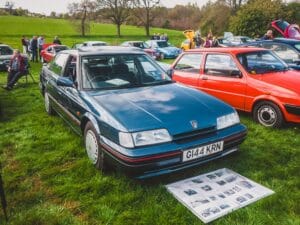
Holley the 1990 Rover 820i
Manual Saloon (Non-Catalyst)
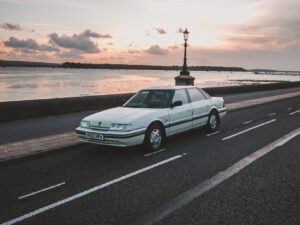
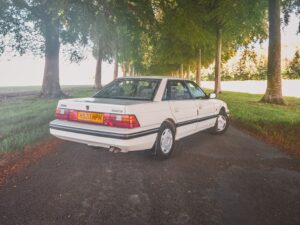
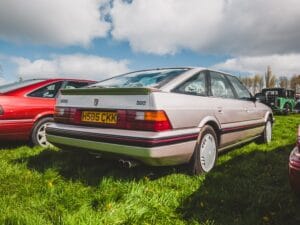
1987 Rover 825i Saloon
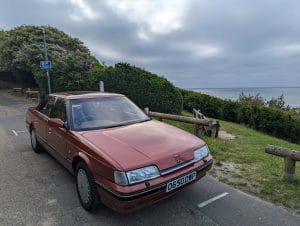
1990 Rover 827Si Auto Saloon
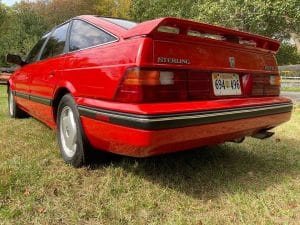
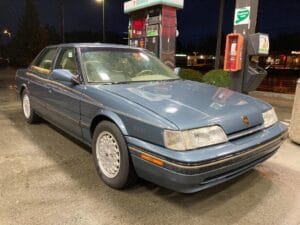
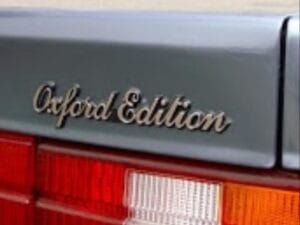
US Sterling Oxford Edition (#320/350) Sedan
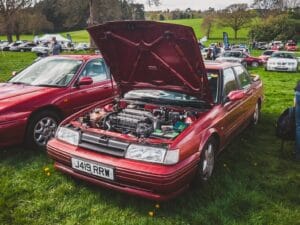
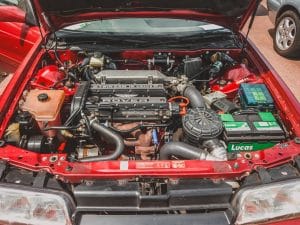
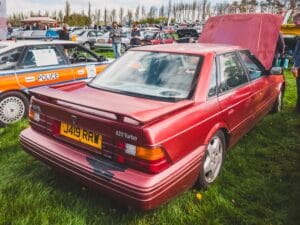
Red Robbo the 1991 Rover 820 Turbo 16v Saloon
‘ENGINEERING IN A FINER FORM’
In the 1980s Austin Rover were looking to replace their aging Rover SD1 with a new large luxury vehicle and wanted to reinvigorate the perceived quality of Rover cars which British customers had lost faith in following Rover’s blunders throughout the 70s. Following the success of their previous collaborations on the Triumph Acclaim (1981), Honda Ballade, Australian market Rover Quintet (1983), and Rover 200 (1984), the British and Japanese decided to join forces again.
Discussions began in August 1981 and by November an agreement to partner on a new luxury car, to provide Rover the replacement they desperately needed for the SD1 and to give Honda a head start in their journey into the large saloon market. The extent of this collaboration differed from those that came before, in that the entire design process for both cars began together from the start, rather than Rover piggybacking off of the success of Honda. The ultimate result was the brand-new contenders in the executive market: the Rover 800 (codename XX) & the Honda Legend (codename HX). An agreement was made that UK market Legends would be assembled alongside the 800 by Rover at Cowley, while Japan market 800s would be produced by Honda in Sayama.
Honda’s aims from the beginning were solely focused on a 4-door saloon, while Rover had ambitions for a 5-door hatchback intended to join the 800 range sometime after launch. By 1982, Rover had also envisaged a 2-soor coupé, as did Honda but they decided not to reveal this aspiration to the British. Despite initial plans to launch simultaneously, Honda beat Rover to it. The Legend was revealed in October 1985 (see Honda Legend page).
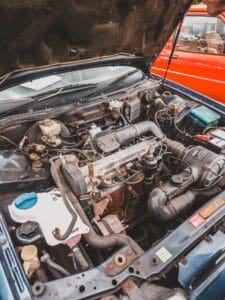
The 800 was launched in July 1986 with only a saloon version initially being available. The 2 litre versions used British Leyland’s M-Series engine, a development of the O-Series with a twin overhead camshaft, 16 valve engine. There were two versions; a single point fuel injection M16e fitted to the 820e/Se and a multi-point fuel injection M16i fitted to the 820i/Si (see 820 M-Series page). The 2.5 litre versions, 825i and Sterling, were fitted with a Honda V6 (C25A) engine (see 825 Honda V6 page). Only 825 cars were available at launch with the 820 models appearing in showrooms a few months later. The 800 was the first of Rover’s executive cars to have front wheel drive with a transversely mounted engine.
From the outset of the collaboration, Honda & Rover both expressed their desire to enter the US large luxury car market with XX & HX. This saw fruition in 1987 with both opting to use new marques for this purpose, Rover choosing their UK luxury 800 model designation “Sterling” and Honda picking “Acura”. Following previous patterns, the Acura Legend reached US customers several months before the Sterling. While the Sterling suffered an abysmal fate in the US (see US Sterling page), the reception of the Acura Legend was quite the opposite (see Acura Legend page). In reverse, the Legend failed to gain as much traction as the 800 in the UK, only a handful of Legend saloons remain today.
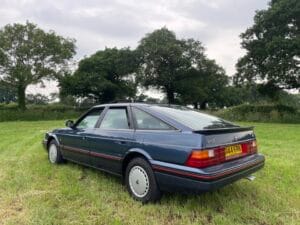
In February 1988 the Honda 2.5 litre V6 was superseded by a Honda 2.7 litre V6 (C27A) and the 825 became 827 (see 827 Honda V6 page). In mid-1988 a hatchback version was added, known as the fastback, which more resembled its SD1 predecessor. The Vitesse became available to denote the top sporting fastback version. A basic fastback was made available, aimed at the fleet market, with a 2 litre 8 valve carburettor engine known as the M8 based on the O-Series. Known as just the 820 it is now the rarest variant of the 800 (see 820 O-Series page).
The joint manufacturing agreement for Legends & 800s at Rover’s Cowley and Honda’s Sayama plants respectively, went far less wonderfully than Honda had visioned. The Cowley built Legends fell far short of Honda’s quality standards, many having to be brought to Honda’s UK Swindon plant to be finalised and others being used as utility vehicles around the Cowley plant. Sayama 800s featured the steel wheels and vertical-flow radiators from the Legend and did not have Boch ABS. By the end of 1988 the joint assembly agreement came to an end at both Cowley and Sayama, with a mere 4409 (472: 1986, 2677: 1987, 1260: 1988) Legends having been put together at Cowley. Subsequent UK Legends were imported from Sayama and all export market 800s were now built in Cowley.
A diesel version was launched in 1990 using a 2.5 litre engine from VM Motori of Italy (see 825 Diesel Mk1 page). There was also a brief run of 500 or so turbocharged M-Series multi-point injection cars, developed with the help of Tickford (see 820 Tickford Turbo page).
The Mk1 had facelift changes in 1988 and 1990. The bumpers from 1990 are notably bulkier and a central control unit was added that had basic in-built diagnostic features and for linking to an external test appliance.
By 1990 Honda had already moved on to their independently designed 2nd generation Legend, leaving Rover to pursue iterating the 800 by itself, eventually leading to the 800’s significant 1992 facelift (see Mk2 page) and finally realised Coupé (see Coupé page).
A much more detailed account of the Rover 800’s history can be found in this article: click here
If you’re not already a member of the Club, please consider joining to help us secure the future of these cars by enabling us to fund remanufacture of crucial and MOT failure parts with prohibitively high development costs/minimum order quantities. Any owners & enthusiasts of these cars are welcome to join the Club (click here).
If any of this information is incorrect, or if you have any information or photos which could improve this page, please contact R600800web@outlook.com
1992 Rover 820 Turbo 16v Fastback
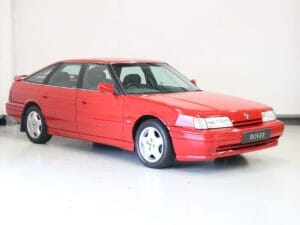
US Sterling 827SLi Fastback
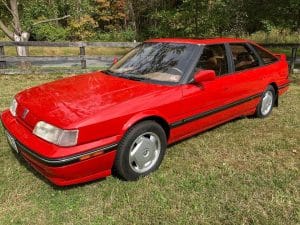
1988 Rover 820Se Fastback
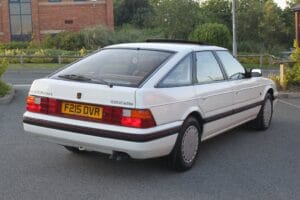
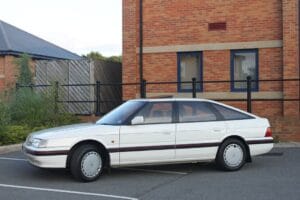
1987 Rover 825 Sterling Saloon
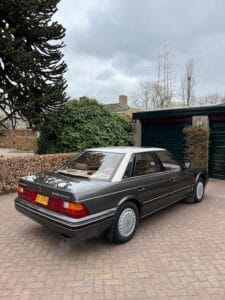
1987 Honda Legend KA2 C25A Auto Saloon
(Built at Cowley by Rover)
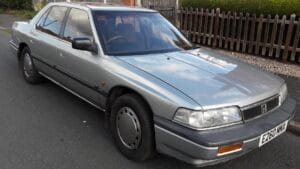
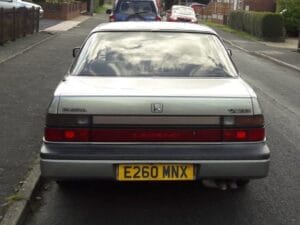
Pauline the 1989 Rover 820 (O-Series) Fastback
‘ENGINEERING IN A FINER FORM’
In the 1980s Austin Rover were looking to replace their aging Rover SD1 with a new large luxury vehicle and wanted to reinvigorate the perceived quality of Rover cars which British customers had lost faith in following Rover’s blunders throughout the 70s. Following the success of their previous collaborations on the Triumph Acclaim (1981), Honda Ballade, Australian market Rover Quintet (1983), and Rover 200 (1984), the British and Japanese decided to join forces again.
Discussions began in August 1981 and by November an agreement to partner on a new luxury car, to provide Rover the replacement they desperately needed for the SD1 and to give Honda a head start in their journey into the large saloon market. The extent of this collaboration differed from those that came before, in that the entire design process for both cars began together from the start, rather than Rover piggybacking off of the success of Honda. The ultimate result was the brand-new contenders in the executive market: the Rover 800 (codename XX) & the Honda Legend (codename HX). An agreement was made that UK market Legends would be assembled alongside the 800 by Rover at Cowley, while Japan market 800s would be produced by Honda in Sayama.
Honda’s aims from the beginning were solely focused on a 4-door saloon, while Rover had ambitions for a 5-door hatchback intended to join the 800 range sometime after launch. By 1982, Rover had also envisaged a 2-soor coupé, as did Honda but they decided not to reveal this aspiration to the British. Despite initial plans to launch simultaneously, Honda beat Rover to it. The Legend was revealed in October 1985 (see Honda Legend page).
The 800 was launched in July 1986 with only a saloon version initially being available. The 2 litre versions used British Leyland’s M-Series engine, a development of the O-Series with a twin overhead camshaft, 16 valve engine. There were two versions; a single point fuel injection M16e fitted to the 820e/Se and a multi-point fuel injection M16i fitted to the 820i/Si (see 820 M-Series page). The 2.5 litre versions, 825i and Sterling, were fitted with a Honda V6 (C25A) engine (see 825 Honda V6 page). Only 825 cars were available at launch with the 820 models appearing in showrooms a few months later. The 800 was the first of Rover’s executive cars to have front wheel drive with a transversely mounted engine.
From the outset of the collaboration, Honda & Rover both expressed their desire to enter the US large luxury car market with XX & HX. This saw fruition in 1987 with both opting to use new marques for this purpose, Rover choosing their UK luxury 800 model designation “Sterling” and Honda picking “Acura”. Following previous patterns, the Acura Legend reached US customers several months before the Sterling. While the Sterling suffered an abysmal fate in the US (see US Sterling page), the reception of the Acura Legend was quite the opposite (see Acura Legend page). In reverse, the Legend failed to gain as much traction as the 800 in the UK, only a handful of Legend saloons remain today.
In February 1988 the Honda 2.5 litre V6 was superseded by a Honda 2.7 litre V6 (C27A) and the 825 became 827 (see 827 Honda V6 page). In mid-1988 a hatchback version was added, known as the fastback, which more resembled its SD1 predecessor. The Vitesse became available to denote the top sporting fastback version. A basic fastback was made available, aimed at the fleet market, with a 2 litre 8 valve carburettor engine known as the M8 based on the O-Series. Known as just the 820 it is now the rarest variant of the 800 (see 820 O-Series page).
The joint manufacturing agreement for Legends & 800s at Rover’s Cowley and Honda’s Sayama plants respectively, went far less wonderfully than Honda had visioned. The Cowley built Legends fell far short of Honda’s quality standards, many having to be brought to Honda’s UK Swindon plant to be finalised and others being used as utility vehicles around the Cowley plant. Sayama 800s featured the steel wheels and vertical-flow radiators from the Legend and did not have Boch ABS. By the end of 1988 the joint assembly agreement came to an end at both Cowley and Sayama, with a mere 4409 (472: 1986, 2677: 1987, 1260: 1988) Legends having been put together at Cowley. Subsequent UK Legends were imported from Sayama and all export market 800s were now built in Cowley.
A diesel version was launched in 1990 using a 2.5 litre engine from VM Motori of Italy (see 825 Diesel Mk1 page). There was also a brief run of 500 or so turbocharged M-Series multi-point injection cars, developed with the help of Tickford (see 820 Tickford Turbo page).
The Mk1 had facelift changes in 1988 and 1990. The bumpers from 1990 are notably bulkier and a central control unit was added that had basic in-built diagnostic features and for linking to an external test appliance.
By 1990 Honda had already moved on to their independently designed 2nd generation Legend, leaving Rover to pursue iterating the 800 by itself, eventually leading to the 800’s significant 1992 facelift (see Mk2 page) and finally realised Coupé (see Coupé page).
A much more detailed account of the Rover 800’s history can be found in this article: click here
If you’re not already a member of the Club, please consider joining to help us secure the future of these cars by enabling us to fund remanufacture of crucial and MOT failure parts with prohibitively high development costs/minimum order quantities. Any owners & enthusiasts of these cars are welcome to join the Club (click here).
If any of this information is incorrect, or if you have any information or photos which could improve this page, please contact R600800web@outlook.com
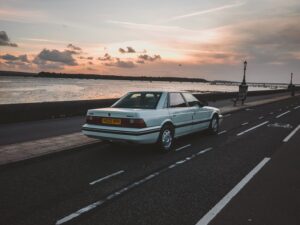
Holley the 1990 Rover 820i
Manual Saloon (Non-Catalyst)
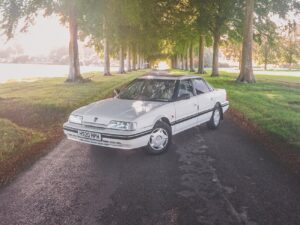
1988 Rover 820Se Fastback
1987 Rover 825 Sterling Saloon
1987 Honda Legend KA2 C25A Auto Saloon
(Built at Cowley by Rover)
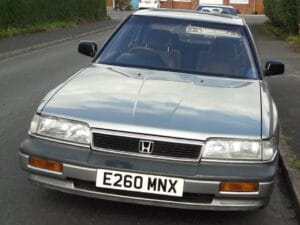
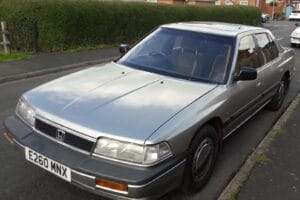
1987 Rover 825i Saloon
1990 Rover 827Si Auto Saloon
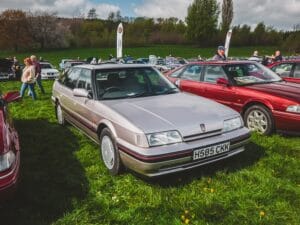
Pauline the 1989 Rover 820 (O-Series) Fastback
1992 Rover 820 Turbo 16v Fastback (Flame Red)
Red Robbo the 1991 Rover 820 Turbo 16v Saloon
Sterling Oxford Edition (#320/350) Sedan
US Sterling 827SLi Fastback